
Opinion
Truly, Naija No Dey Carry Last
By Zayd Ibn Isah
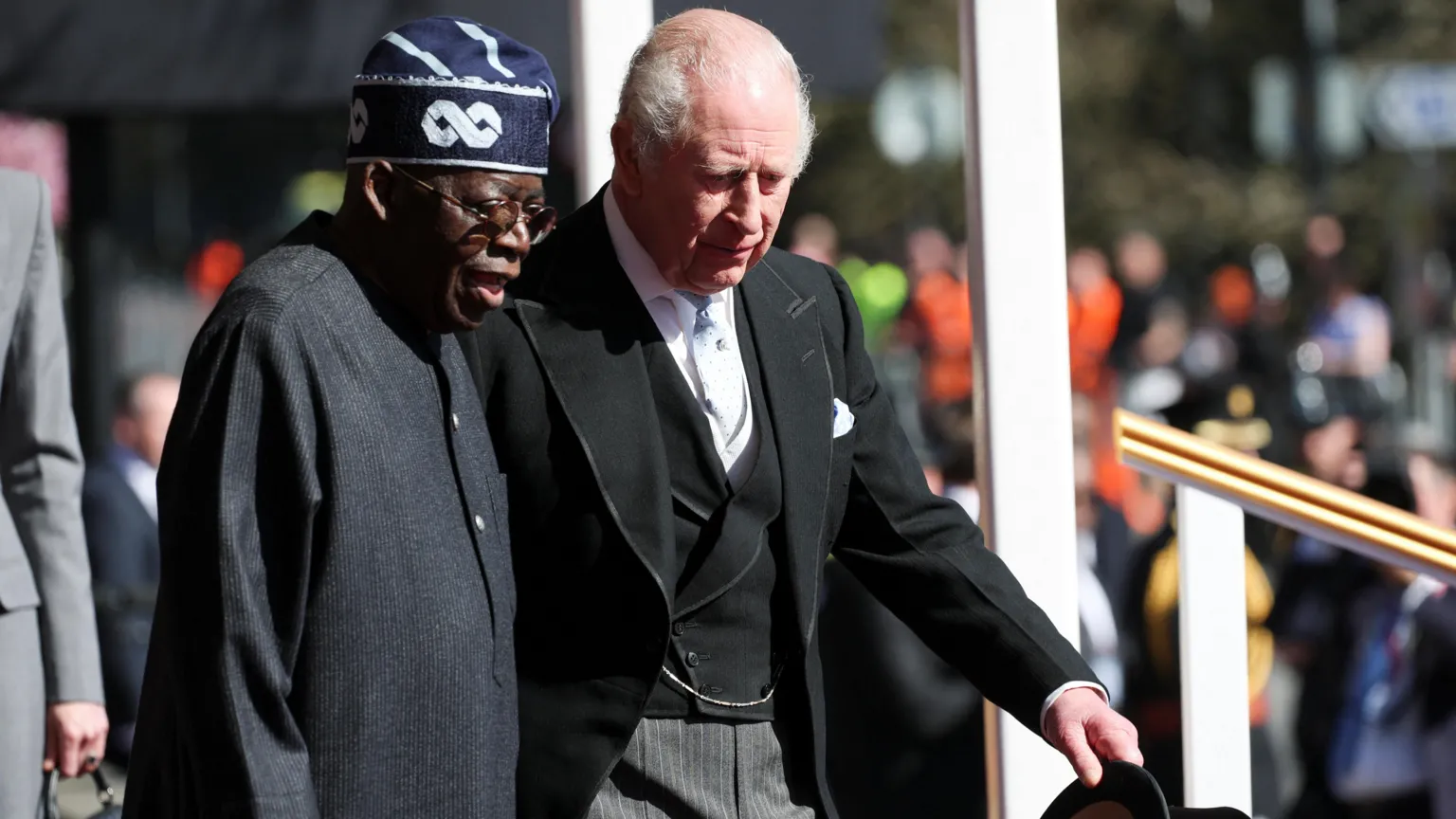
When the King of England, King Charles III, echoed a phrase that has long resonated across the streets of Nigeria, “Naija No Dey Carry Last”, he did more than offer a toast. He delivered a cultural acknowledgment, one that captured the essence of a people whose influence continues to stretch far beyond their borders.
The occasion was the state visit of President Bola Ahmed Tinubu to the United Kingdom. In his remarks, the King spoke glowingly of Nigerians and their immense contributions across diverse sectors in British society and globally. From medicine to law, from technology to entertainment, Nigerians have carved a niche defined by excellence, resilience, and an almost stubborn refusal to be ordinary.
But it was in his closing words that the message became truly symbolic.
“Let me propose a toast,” he said, “To the President and people of Nigeria, Naija No Dey Carry Last!”
In that moment, a phrase born from the heart of Nigerian popular culture transcended geography and class. It moved from the streets of Lagos, Kano, and Port Harcourt into the refined setting of British royalty. It was a subtle but powerful reminder that culture, when authentic, knows no hierarchy.
The phrase itself is more than a boast. It is a declaration of intent. It reflects a mindset, a refusal to be left behind despite the odds. For a country often weighed down by its contradictions, this attitude has become both a coping mechanism and a survival strategy.
And perhaps that is what makes the King’s words even more profound.
Because to understand Nigeria is to understand paradox. It is a nation of immense potential, yet burdened by systemic challenges. A country rich in human capital, yet grappling with structural inefficiencies. And still, in the midst of it all, Nigerians rise, again and again.
Across the diaspora, the Nigerian story is one of quiet domination. In the United Kingdom, Nigerians are among the most educated and upwardly mobile immigrant groups. In the United States, they continue to excel in academia and professional fields. In global entertainment, Nigerian music, Afrobeats, has become a cultural force, commanding stages and charts worldwide.
There is something quietly remarkable about what the data continues to confirm. According to a 2023 report from the Migration Policy Institute in Washington, Nigerians living in the United States are the single most educated immigrant group in the country, with 61 percent holding Bachelor’s degrees, outpacing not only other immigrant communities but native-born Americans as well. And education, for the Nigerian, is never merely a credential. It is a launchpad. Across medicine, technology, law, literature, sports, entertainment, entrepreneurship, and the ever-expanding frontier of digital influence, Nigerians are not just participating in the American Dream, they are redefining it.
But America is only one canvas. Wherever Nigerians have planted their feet, whether in the boardrooms of London, the lecture halls of Toronto, the football pitches of Europe, or the streaming platforms of the world, they have left their mark in ink that does not fade. The world has taken notice. And now, the so-called myth of the Nigerian spirit has long since outgrown the word “myth.” In the language of today’s generation: the hype is entirely real. How else does one account for the Grammy winners, the Guinness World Record breakers, the football champions, the Afrobeats architects, the literary titans, the streaming giants, the academic prodigies, and the science and tech innovators this nation continues to produce at a pace that astonishes even its closest admirers?
Critics, of course, exist as they always do. Some argue that Nigerians only flourish once they escape the artificial limitations imposed by a country of over 200 million people, a nation whose internal systems too often bury the potential they are supposed to nurture. Others still reach for the tired, dishonest trope of corruption and crime, as though a handful of bad actors could ever define a people so vast, so varied, so luminously complex. They cannot. A few bad eggs have never been, and will never be, the whole crate.
Like every great civilization, we carry our flaws. We own them. But we refuse to be imprisoned by them, and we absolutely refuse to let the failures of a few drown out the triumphs of the many. The antidote to a distorted narrative is a truer, louder one. It is the deliberate, sustained showcasing of what we actually are: diligent, authentic, warm, spiritual, and relentlessly driven. This is what Chimamanda Ngozi Adichie meant when she warned the world against the “danger of a single story”. Nigeria’s story is not single. It is symphonic.
The Nigerian spirit is not a slogan. It is a living force, one that carries real weight, real consequence, real power for good. It is something we owe our children: the inheritance of knowing who they come from. Let us tell them about Professor Wole Soyinka, who bent language into literature that moved the world. About Aliko Dangote, who built a global empire from the ground up. About Nnedi Okorafor, who carried Nigerian imagination into the stars. About Tunde Onakoya, who used chess to fight for children’s futures. About Hilda Baci, who cooked her way into the record books with fire and grace. About Damini Ogulu (Burna Boy), who made African music impossible to ignore. About Ngozi Okonjo-Iweala, leading the World Trade Organization with quiet, unshakeable authority. About Yemi Alade, Victor Osimhen, Akinwumi Adesina, and Ademola Lookman. Let our young people launch into greatness knowing, in their bones, that they descend from a heritage of excellence, not borrowed, not accidental, but earned and ancestral.
This is who we are. When the odds stack highest, when the road narrows and the voices of doubt grow loudest, the Nigerian finds a way. Always.
Which is precisely why, when King Charles reached for the words “Naija no dey carry last,” something shifted in the air. A British monarch, at one of the most formal settings in the world, borrowing the street-born, heart-forged language of Nigerian defiance and pride to celebrate a Nigerian head of state on British soil. It was not just a diplomatic flourish. It was an acknowledgement from the highest table that Nigeria’s spirit is impossible to ignore, impossible to contain, and impossible not to admire.
This is exactly why I wrote The Nigerian Spirit Is Special. Not as an act of sentiment, but as an act of witness. I wanted to document, celebrate, and amplify the exceptionality that defines us, to give our greatness the permanent record it deserves. Because long before a king quoted our streets, we already knew the truth: Naija no dey carry last.
Yet, there is also a deeper lesson in that royal toast, one that should not be lost on us at home.
If the world can see and celebrate the potential of Nigerians, then Nigeria itself must begin to do the same. Recognition abroad must translate into responsibility at home. The brilliance of Nigerians in foreign lands should serve not only as a source of pride but also as a challenge to build a system that nurtures and retains such excellence.
For what good is a people that shine everywhere else but struggle to shine within?
The phrase “Naija No Dey Carry Last” must therefore evolve from a slogan of resilience into a philosophy of governance, accountability, and national rebirth.
It must reflect not just the success of Nigerians abroad, but the progress of Nigeria itself.
As King Charles III raised his glass in honour of Nigeria, he inadvertently held up a mirror to us, a reminder of who we are, and perhaps, who we ought to become.
Truly, Naija no dey carry last. At-all, at-all.
Credit: Daily Trust


World Bank Says Nigeria’s Inflation Remains Stubbornly High, Despite Rebasing

Security Alert: U.S. Orders Partial Evacuation of Nigeria Embassy, Flags 23 States as High-Risk

Millions Ready to Support You”: Group Urges Goodluck Jonathan to Contest 2027 Presidency

Wike Orders Arrest, Seizes Land After Abuja Building Collapse

Trump Accepts Two-Week Ceasefire Deal with Iran

Dangote Refinery Hikes Petrol to N1,275, Diesel to N1,950

Experts Share 14 Practical Ways to Make Your Easter Holidays Memorable

ADC Kicks Against INEC Move, Alleges Political Pressure Over Leadership Delisting

Nigeria Douses Diplomatic Tension, Apologises to South Africa Over ‘Igbo King’ Row

Defections Rock Green Chamber as 28 Lawmakers Switch Parties Ahead of Primaries

Darkness, Debt and Broken Promises: Inside Nigeria’s Power Crisis Fueling Calls for Adelabu’s Sack

Nigeria Secures Diplomatic Green Light from 10 Nations as Envoys Await Final Clearance

Chaos in South Africa as Protests Over Alleged Igbo King Coronation Turn Violent

2027 Race Gathers Steam as Two Ministers Quit Cabinet to Chase Electoral Ambitions
